 Jejje
Jejje
The paint can gleam as much as it likes, but it's the interior that determines whether the car feels truly well cared for. With the right products and a considered order of work, it doesn't take long to bring back that new-car feeling.
Start with the right order
A common mistake is spraying products haphazardly. Instead, work from top to bottom and from dry to wet: vacuum first, then wipe down hard surfaces, and do fabric and leather last. That way you avoid dirt dislodged from the headliner ending up on an already-cleaned dashboard.
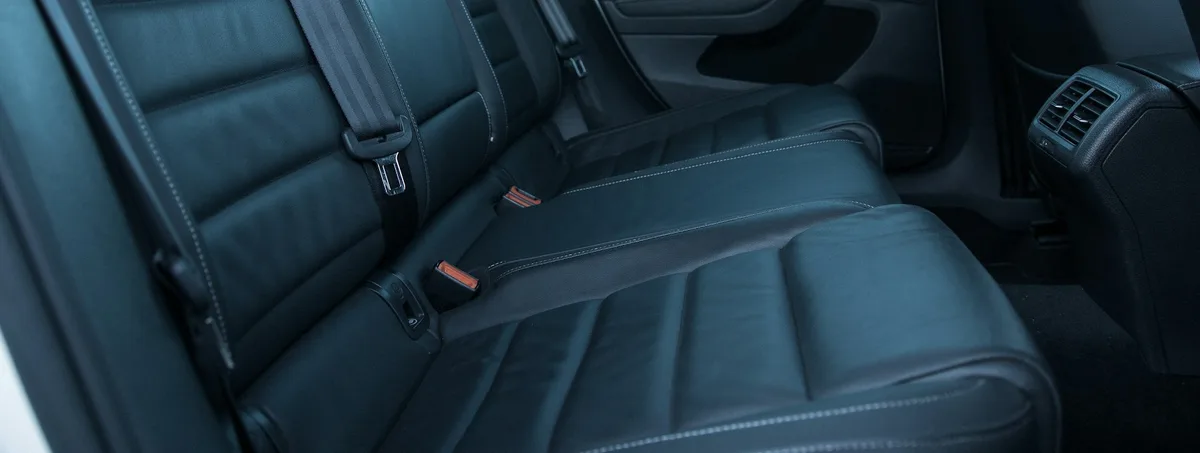
- Vacuum thoroughly, including under mats, in door pockets and between the seats.
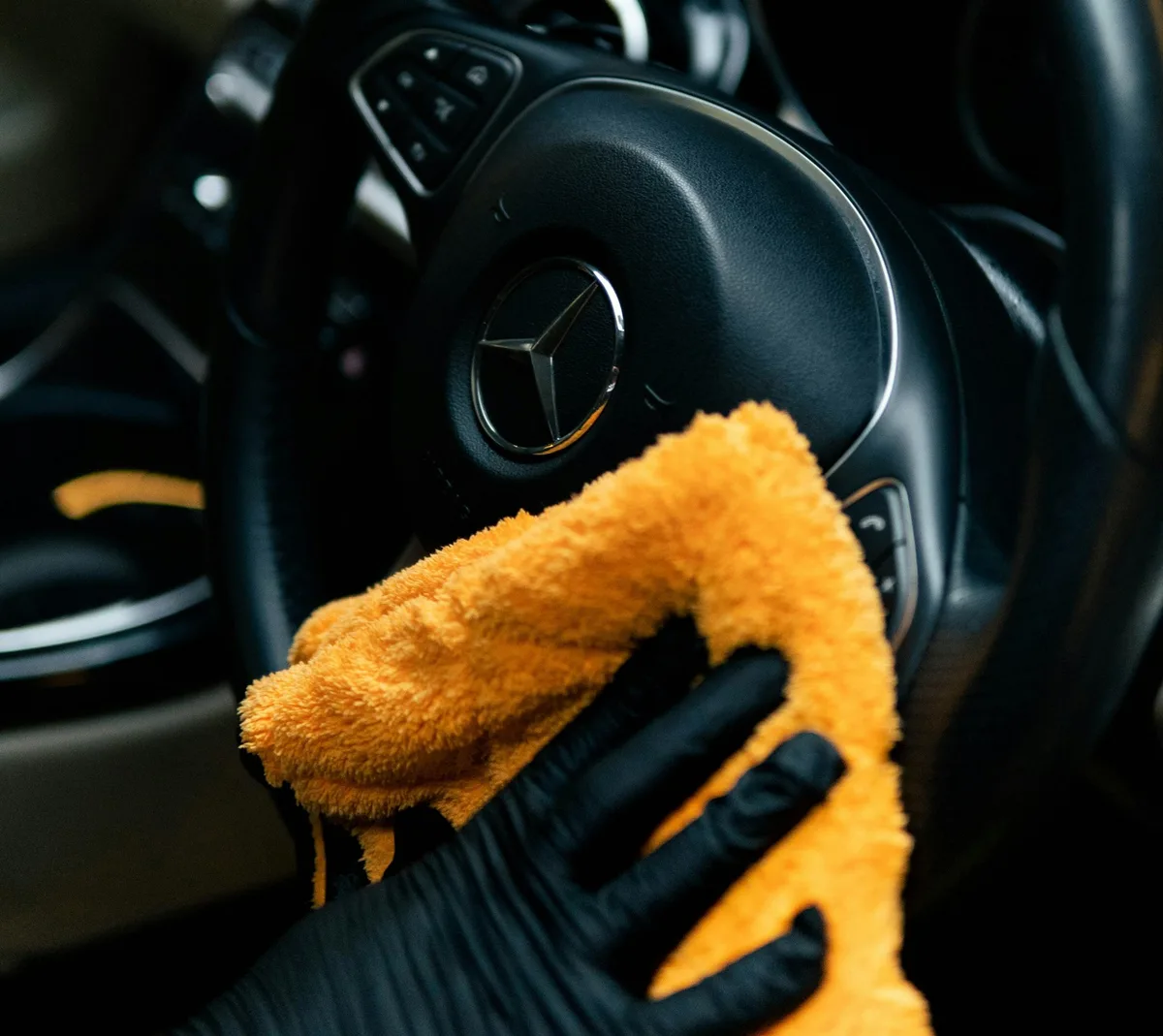
- Wipe all hard surfaces - dashboard, centre console, door panels and steering wheel.
- Clean fabric, leather or alcantara.
- Do the windows on the inside last, since dust from previous steps easily ends up on freshly cleaned glass.
APC - the foundation of all interior cleaning
An all-purpose cleaner, often called APC (All Purpose Cleaner), is the most versatile product you can have in the garage. It works on fabric, leather, alcantara, plastic and rubber, and can generally be diluted to different strengths depending on how dirty things are - a weaker mix for lightly dusty surfaces, a stronger one for genuinely ingrained stains.
Tershine APC - Interior Cleaner is an example of such a product. It's designed to clean in one pass without leaving a sticky film behind, and also has a function that blocks and neutralises bad odours instead of just masking them with fragrance. Spray on, work in with a microfibre cloth and wipe off - for tougher stains, allow the product to dwell for a minute before wiping.
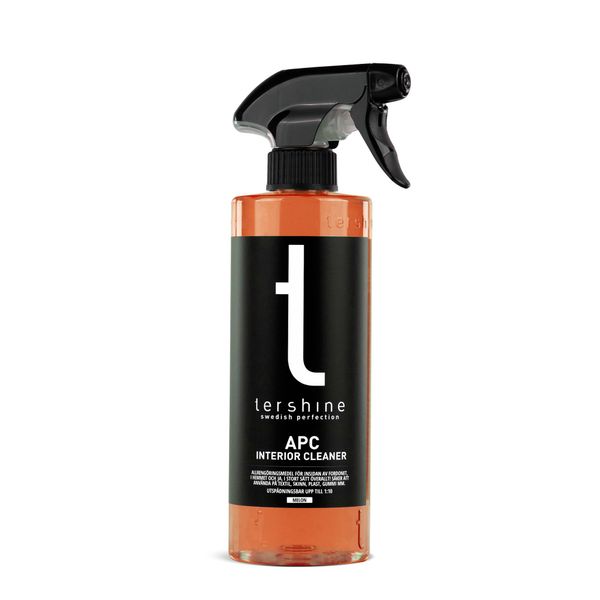
Interior detailer gives the final polished finish
Once the surfaces are clean, it's an interior detailer that gives that slightly more refined, "new-car-like" impression. Such a product gives plastic and rubber details an even, natural sheen without becoming glossy or sticky, while often containing UV protection that helps prevent the plastic going grey and brittle from sunlight over time.
The right microfibre cloth for the right surface
Use different cloths for different materials - one for glass, one for leather and one for plastic. If you mix up cloths you risk transferring wax residue or product residue that makes the next surface sticky or leaves a visible film.
That's why a microfibre applicator sponge for interior use can be a worthwhile purchase. Unlike a regular cloth, which easily soaks up all the product and becomes unwieldy, a microfibre sponge (or applicator) gives completely different support. It spreads pressure perfectly across the car's interior, making it significantly easier to work plastic and leather conditioner in evenly without it becoming patchy or streaky.
The detailing brush - the secret behind professional results
To get truly clean in all the car's nooks and crannies, a soft interior brush is invaluable. While cloths and sponges just glide over the surface, a brush's bristles easily reach down into air vents, around buttons and deep into leather's texture to lift ingrained dirt. Just make sure to use a brush with soft bristles that won't scratch the plastic, and always have a microfibre cloth ready to wipe up the loosened dirt immediately afterwards.
- Always test an out-of-sight area first for interior use - especially on light leather or alcantara.
- Use a detailing brush to work the cleaner into seams and air vents.
- Combine an interior detailer with UV protection to extend the life of the plastic.
Summary
The new-car feeling inside is more about the right order and the right products than scrubbing hard. Vacuum, clean with an APC like Tershine Interior Cleaner, finish with an interior detailer and keep track of which microfibre cloth you use where. Do it regularly and the interior stays fresh significantly longer between deep cleans.